

Blog: finance and real estate made simple
Articles and insights to help you navigate and grow
Why have government bond prices fallen since the beginning of the year?

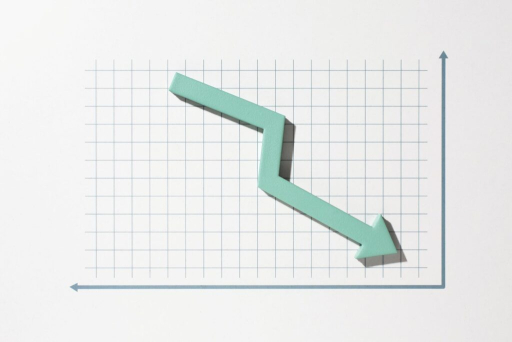
Government bonds have traditionally been considered one of the more conservative types of investment. Yet this year, they have given investors little reason to celebrate. Czech government bond prices have fallen significantly since the beginning of the year – by approximately 2.5% on average for five-year bonds and by almost 6% for ten-year bonds. Why has this happened? And is it a cause for concern?
When yields rise, bond prices fall
The most important rule of the bond market is simple: when required yields rise, the prices of previously issued bonds fall.
Imagine, for example, a bond that an investor purchased with a fixed interest rate, or coupon, of 4%. If newly issued bonds begin to offer a fixed interest rate of 5%, the older bond becomes less attractive to investors. For its yield at the time of purchase to match the 5% now available on new bonds, it has to trade at a discount, causing its market price to fall.
This mechanism is precisely what has driven bond prices lower this year. Yields on Czech government bonds have risen significantly. The yield on ten-year Czech government bonds is currently slightly above 5% per year, while five-year bonds are yielding around 4.4%.
Inflation concerns are the main challenge
One of the main reasons is growing uncertainty about future inflation. And inflation is a major risk for bondholders.
Energy prices, particularly oil and gas prices, have risen in recent months. This has been driven, among other factors, by geopolitical risks and the escalation of conflict in the Middle East. The price of Brent crude oil has risen above $100 per barrel in recent days, once again raising concerns that higher energy costs will gradually feed through into the prices of goods and services.
When investors expect higher inflation, they also demand higher yields on bonds. This is because they want to be compensated for the fact that future interest payments will have a lower real value as a result of inflation.
Government budgets also play a role
Another factor is the volume of bonds that governments need to issue. Large budget deficits mean greater financing needs and therefore a larger supply of government bonds on the market.
Czech government debt reached CZK 3.73 trillion at the end of the first half of 2026. During the first six months of the year alone, the government sold more than CZK 276 billion in koruna-denominated medium- and long-term bonds.
When the supply of bonds increases while investors simultaneously demand higher yields, bond prices naturally fall.
Why are longer-term bonds falling more?
You may have noticed that ten-year bonds have lost significantly more value than five-year bonds. This is no coincidence.
The longer a bond's maturity, the more sensitive its price is to changes in interest rates. As a result, a ten-year bond reacts more strongly to rising yields than a five-year bond.
Moreover, the current trend is not unique to the Czech Republic. Long-term government bond yields have been rising across developed economies. Investors are reassessing their expectations regarding inflation, interest rates, government budgets and future economic growth.
Bad news for existing investors, an interesting opportunity for new ones
Falling bond prices are, of course, not welcome news for investors who already hold bonds and are watching their current market value decline. From the perspective of a new investor, or someone investing new money, however, the situation is beginning to look more attractive.
New investments in bonds and bond funds now offer more attractive prospective returns. Moreover, if inflation stabilises and interest rates begin to fall again in the coming years, bond prices could rise, allowing investors to benefit not only from regular interest income but also from potentially attractive capital gains.
The current decline therefore does not necessarily have to be viewed solely as a cause for concern. On the contrary, it may represent an interesting opportunity for investors to gradually increase their exposure to high-quality government and corporate bonds at significantly more attractive yields than in previous years.
The bond market ultimately reminds us of a simple rule: when prices fall, yields rise. And those higher yields may be one of the most compelling reasons for investors to view today's decline not only as a problem, but also as an opportunity.
Do not hesitate to discuss the current opportunities with your adviser. At Stone & Belter, we have extensive experience with bond funds and would be happy to propose a solution tailored to your individual needs.

Stone & belter blog
Similar articles
Category










11.09.2025
The False Sense of Security Among Entrepreneurs: Financial Advisor? Thanks, I Don’t Need One… Or Do I?
Ing. Marek Jůzl, EFP

11.06.2025
Trump’s Tariffs Shake the Markets: What Does This Mean for Your Investments?
Mgr. Michal Pekař

10.02.2025
Czech National Bank Cuts Interest Rates to 3.75%: What This Means for Your Savings, Mortgages, and Investments
Ondřej Marek11.09.2025
The False Sense of Security Among Entrepreneurs: Financial Advisor? Thanks, I Don’t Need One… Or Do I?
Ing. Marek Jůzl, EFP11.06.2025
Trump’s Tariffs Shake the Markets: What Does This Mean for Your Investments?
Mgr. Michal Pekař10.02.2025
Czech National Bank Cuts Interest Rates to 3.75%: What This Means for Your Savings, Mortgages, and Investments
Ondřej Marek10.02.2025
Czech National Bank Cuts Interest Rates to 3.75%: What This Means for Your Savings, Mortgages, and Investments
Ondřej Marek