
The mortgage market in the Czech Republic is about to undergo another significant change. The Czech National Bank has introduced stricter rules for investment mortgages, which will take effect on April 1, 2026. The main objective of this step is to limit risks associated with the growing debt levels of investors and to slow the pace of investment property purchases, which have significantly influenced the real estate market in recent years. From the perspective of a financial advisor, this change may fundamentally affect how people finance investment apartments and build real estate portfolios.
However, the regulation does not apply to all mortgages. It primarily targets cases where a client purchases a property for investment purposes—typically an apartment intended for rental or another property added to an investment portfolio. Mortgages for owner-occupied housing remain largely unchanged. According to the central bank, the investment segment poses a higher risk to the stability of the financial system. Investors often use high leverage and purchase multiple properties at once, which may present greater risks for the banking sector in the event of an economic slowdown or a decline in property prices.
The main changes concern two key mortgage parameters: LTV and DTI. These determine the maximum loan amount and the client’s overall debt in relation to their income.
1. Lower maximum LTV for investment mortgages
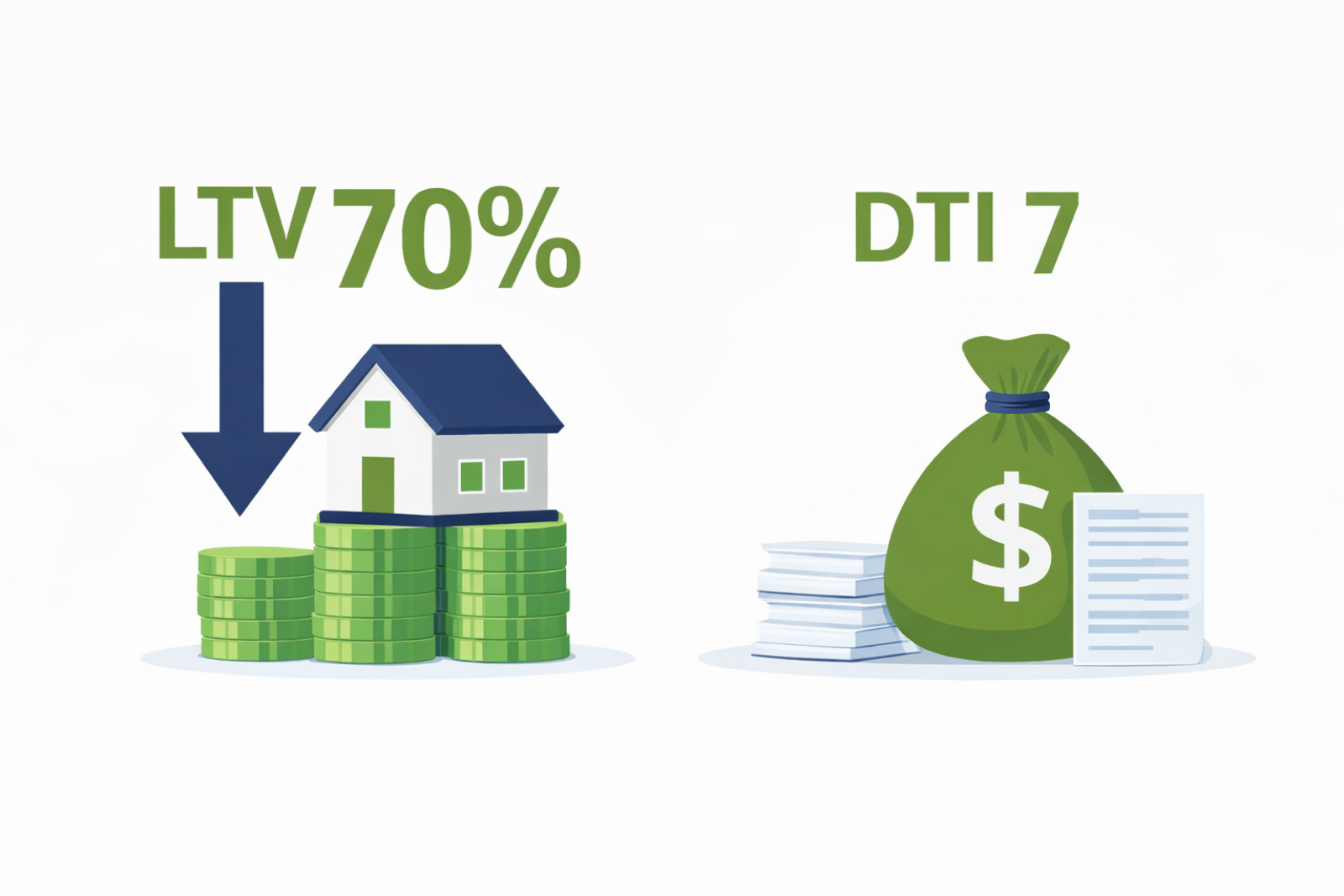
The first change is a reduction of the maximum LTV to 70% for investment mortgages. LTV (Loan-to-Value) expresses the ratio between the loan amount and the value of the pledged property. Currently, it is common for banks to finance up to 80% of a property’s price, and up to 90% for younger clients. Under the new rules, however, investment mortgages will be limited to 70% of the property value. In practice, this means that investors will need to have significantly more of their own capital.
A practical example shows how substantial the difference can be. If an investor buys an apartment for CZK 6 million, today they could obtain a mortgage of approximately CZK 4.8 million. After the new regulation comes into effect, the maximum loan amount would be about CZK 4.2 million. The remaining purchase price would have to be financed from the investor’s own funds or through additional collateral.
2. The return of the DTI limit
The second major change is the reintroduction of the DTI (Debt-to-Income) limit. This indicator restricts a client’s total debt relative to their annual income. Under the proposed rules, the limit should be set at DTI 7, meaning that a client’s total debt should not exceed seven times their annual net income.
For example, if an investor has an annual income of CZK 800,000, their maximum total debt should be approximately CZK 5.6 million. If they already have other mortgages or loans, their capacity for additional financing will decrease significantly.
How banks will identify investment mortgages
An important question is how banks will determine whether a mortgage is for investment purposes.
In practice, the assessment will focus mainly on the purpose of the loan and the ownership of other properties. Some banks already check records in the real estate cadastre to determine how many properties a client owns.
As a result, these rules may also affect people who do not consider themselves investors. For example, simply owning multiple properties—perhaps inheriting a cottage from grandparents or receiving an apartment from parents—could lead a bank to assess a mortgage application more strictly, even when the client is applying for a mortgage for their own housing. The client may then be surprised to find that instead of the expected 20% down payment, they might need 30% of the purchase price.
In some banks, stricter rules for investment mortgages have already existed for some time. For example, mortgages intended for rental properties may have been subject to different parameters than mortgages for owner-occupied housing—such as shorter maturities or stricter financing limits. In some cases, the maximum LTV was set at 80% and the loan maturity limited to only 20 years.
For anyone planning to use a mortgage to purchase a house or apartment in the future, one important conclusion follows: real estate financing is no longer as simple as it used to be. More rules and limits are being introduced, and sometimes even a small detail can significantly affect the outcome of a mortgage application.
This is precisely why it makes more sense today to arrange a mortgage with someone who understands the current banking rules and can navigate them effectively. It is not only about the interest rate, but mainly about ensuring that the client knows in advance how much of their own funds they will actually need and how the bank will assess their situation. Simply put, the more regulations appear on the market, the more important it becomes to have a well-thought-out financing strategy before starting to search for a specific property.